
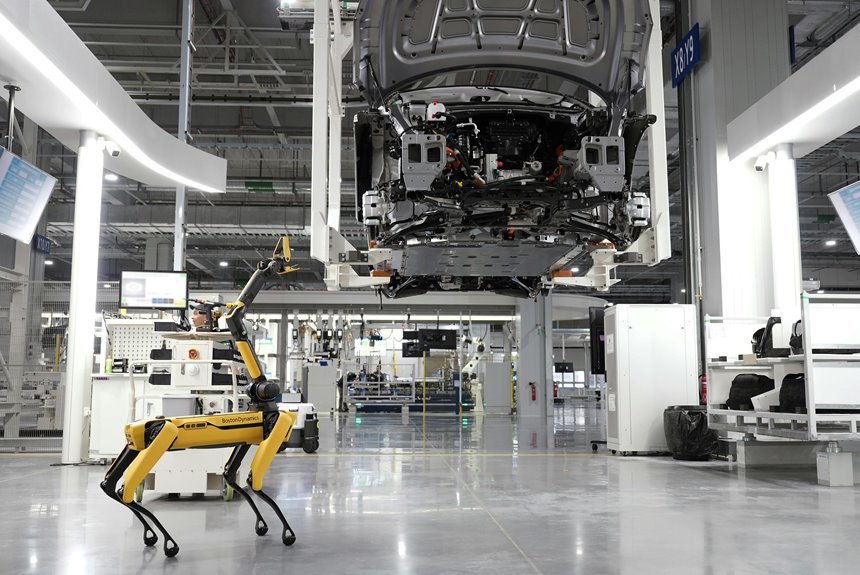
Smart Automation System 4805503293 Performance

The Smart Automation System 4805503293 exhibits noteworthy performance metrics, highlighting its efficiency and accuracy. Rigorous assessments confirm its capability to minimize human error and streamline workflows across diverse sectors. Users report substantial operational improvements, yet the system’s potential extends beyond current applications. A closer examination of its features and real-world success stories reveals insights into its transformative impact on automation processes. What implications might these advancements have for future automation strategies?
Key Features of the Smart Automation System 4805503293
The Smart Automation System 4805503293 is characterized by several key features that enhance its operational efficacy and versatility.
Notably, it incorporates a user-friendly interface that simplifies interaction for operators. Additionally, its customizable settings allow users to tailor functionalities according to specific needs, promoting a sense of autonomy and efficiency.
These attributes collectively contribute to a robust system designed for flexible automation solutions.
Performance Metrics: Measuring Efficiency and Accuracy
How can one effectively measure the performance of the Smart Automation System 4805503293?
Establishing clear efficiency benchmarks allows for comparative analysis against industry standards.
Concurrently, conducting rigorous accuracy assessments ensures that the outputs align with expected results.
Real-World Applications: Success Stories and Case Studies
While numerous industries have adopted Smart Automation System 4805503293, its effectiveness is best illustrated through specific success stories and case studies.
For instance, a manufacturing plant reported significant cost savings after integrating the system, optimizing industrial automation processes.
These real-world applications demonstrate how Smart Automation System 4805503293 enhances operational efficiency, reduces human error, and ultimately empowers businesses to achieve greater autonomy in their production workflows.
Future Trends: What’s Next for Smart Automation Technology?
As industries continue to evolve, the trajectory of Smart Automation Technology indicates a shift towards increased integration of artificial intelligence and machine learning capabilities.
Future developments will likely emphasize adaptive systems that learn and optimize processes autonomously, enhancing operational efficiency.
This evolution promises significant advancements, allowing organizations to harness data-driven insights and maintain flexibility in ever-changing market demands while promoting greater autonomy in decision-making processes.
Conclusion
In conclusion, the Smart Automation System 4805503293 stands out as a beacon of innovation, demonstrating measurable efficiency and accuracy that resonate across various industries. With users reporting significant operational improvements, this system not only reduces human error but also enhances workflow optimization. As the automation landscape evolves, it is clear that this technology is paving the way for businesses to work smarter, not harder, ultimately driving productivity and cost savings in an increasingly competitive market.